
I first heard about Stella Lefty — or rather, the controversy surrounding her — a few months ago.
I thought it was just another internet drama that would burn out in 48 hours. That’s not what happened.
Lefty’s track “Boston” hit No. 2 on the Billboard Hot 100. Long Way Home, her debut album, dropped in August, and she’s touring North America in 2027. Now, this was more than just TikTok discourse; it was the emergence of a new star — much to my chagrin.
For those who don’t know, Stella Lefkofsky is a 24-year-old singer-songwriter and the daughter of billionaire entrepreneur Eric Lefkofsky, co-founder of Groupon and Tempus. That background sparked instant “nepo baby” debates and claims that she’s an industry plant. For me, creative originality is the larger issue.
Her privilege wasn’t the only thing critics pointed out; others pointed out striking similarities as well.
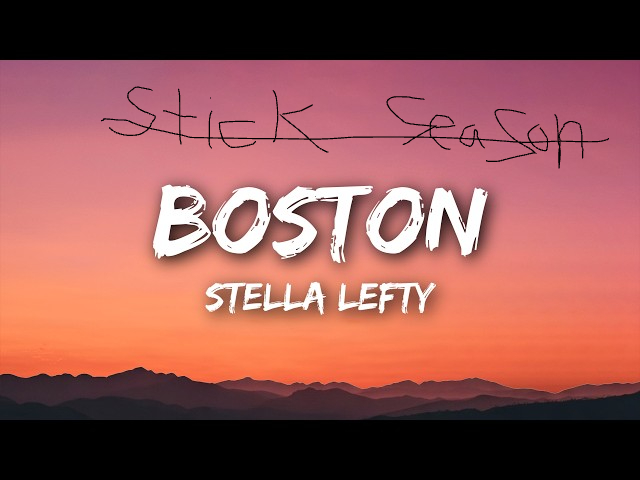
“Boston” was the most contentious track. Listeners immediately recognized shades of Noah Kahan’s 2022 anthem “Stick Season.” After Kahan’s team contacted the label, “Boston” was rereleased with Kahan credited as a songwriter. Lefty insisted she hadn’t thought of Kahan when she wrote it, which illustrates an important distinction: sounding remarkable like another piece isn’t automatic plagiarism.
I will say one thing, though. From 2022 to 2024, Stella Lefty posted acoustic covers of Noah Kahan’s “Stick Season” multiple times on TikTok, expressing her admiration for him frequently. It’s also weird that Lefty named her track “Boston” since I can’t find any connection between her and the New England city. But Noah Kahan is from nearby Vermont, and he sold out Fenway Park four straight nights in July 2026, becoming the first artist to do so.
Anyway, I can’t read Lefty’s mind, and neither can anyone on TikTok. However, as creators, we must accept a simple truth: your audience will notice patterns before you do, and you can’t control how they will react.
Then Came “Summer You Were Mine”
The controversy didn’t end there.
According to listeners, “Summer You Were Mine” heavily influenced The Chicks’ 1998 hit “There’s Your Trouble.”
It looked like another case of missing credits at first. But as Rolling Stone reported, Atlantic Records had cleared the song with Sony Publishing in June. The missing streaming tags were just a platform glitch, and the original writers were added right away.
In the meantime, the internet kept digging. People noticed similarities between her track “Why Wouldn’t We” and Blake Shelton’s “I’ll Name the Dogs,” “Seven Eleven” and Wheatus’ “Teenage Dirtbag,” and “Misery” and “A Million Dreams” from The Greatest Showman.
Again, similarity does not prove plagiarism. And creative work is often built on influence. But something smells fishy to me.
Nobody Creates in a Vacuum
Throughout music history, we can see similar types of controversies.
Take George Harrison as an example.
After its melody was found to violate the copyright of Ronald Mack’s “He’s So Fine,” recorded by the Chiffons, “My Sweet Lord” became one of the most famous copyright cases in popular music history. In a lengthy lawsuit, a federal court found that the songs were sufficiently similar to constitute infringement.
Or Nirvana’s “Come as You Are.”
The guitar riff was often compared to Killing Joke’s “Eighties.” Members of Killing Joke accused Nirvana of copying the riff, but the bands never went through the same copyright battle Harrison experienced.
There’s also Lana Del Rey’s “Get Free,” which sparked a copyright dispute with Radiohead because it resembled “Creep.” Radiohead’s publisher sought songwriting credit, while the band denied Del Rey’s assertion that the band had sued. It was eventually resolved without the dramatic courtroom battle that was initially reported.
There’s something inherently referential about music. Artists absorb, reinterpret, and borrow consciously or subconsciously. It’s the same with writing, photography, YouTube, and podcasts.
This lesson isn’t about never sounding like anyone else. It’s about acknowledging who influenced you and building something unmistakably yours. After all, George Harrison, Nirvana, and Lana Del Rey have their own sounds — even if they were influenced by someone from time to time.
Influence isn’t the Problem, Lack of Identity Is
Having been a freelancer and content creator for longer than I’d like to admit, I spend a lot of time studying other people’s stuff. That’s how you sharpen your skills. You read writers you admire, examine headlines, and figure out why one video hooks you for 15 minutes while another loses you in 30 seconds.
And here’s what I’ve learned. It’s okay to borrow techniques. It’s when you borrow entire creative identities that you get lost.
Imagine an author whose first book sounds like Stephen King and whose next sounds like Stephenie Meyer. Even if the writing is good and both sell, readers will still inevitably ask: “Who are the f you?”
You could also think of a YouTube channel uploading a stealth camping video one week and a music criticism channel the next. Neither format is bad, but taken together, they don’t explain to the audience why you’re worth their attention since they can’t pin your content down.
Ultimately, that’s what Stella Lefty is about: How do you survive when your influences are so heavy that your own creative identity is lost?
Give Credit Where Credit Is Due
Duplicating work on the internet is ridiculously easy. Even if you don’t steal an article, you copy the headline. Instead of stealing a video, you mimic the thumbnail, hook, and pacing of it.
That’s why transparent attribution matters. If someone inspired the format or gave you the idea, say so. If you say “I got this idea from…”, it builds credibility, not weakness.
When you make stealth camping content because Steve Wallis inspired you, credit his influence, then make it your own. Bring your own personality to the story, experiment with bizarre locations, or play with your own sense of humor.
Look at creators like Kevin from Small Plots, Sam Bananas, or Camping with Champion. All of them make stealth or camping videos, but their perspectives are entirely different.
Ingredients vs. The Finished Meal
Rather than the final dish, your influences are the ingredients.
By taking someone else’s recipe, changing three words, and adding your name, you will make a big impact. If you learn to understand how flavors interact, and then tailor a recipe to your own taste, you’re truly creating.
For years, I’ve been dissecting favorite authors and publications. However, I never wanted to become the next Seth Godin, Stephen King, or whatever is trending this week. I wanted it to sound like Albert Costill.
The Internet Doesn’t Need Another Replica
At first, it’s easiest to reverse engineer what already works. A polished tribute act, however, becomes a polished imitation of success.
It’s okay to be influenced at the beginning, but as you progress, those influences should fade into the background. Whenever people consume great work, they should not think, “This is a knockoff of X.” Instead, they should think, “This is so them.”
There are four basic rules for creators to follow in the Stella Lefty situation:
- Accept influence. It’s impossible to avoid inspiration. Don’t be afraid to embrace it.
- Know the boundaries. Learn how to differentiate between inspiration, interpolation, and plagiarism.
- Give credit. If someone influences you, shout them out.
- Build your own voice. If you’re entering a crowded niche, don’t worry about someone else doing it already. Think about what makes you unique, like your humor, your perspective, your narrative style, and the weird hyper-fixations you have.
This isn’t about inventing a new medium. It’s about taking everything you’ve read, watched, and experienced, filtering it through your own lens, and making it your own.