
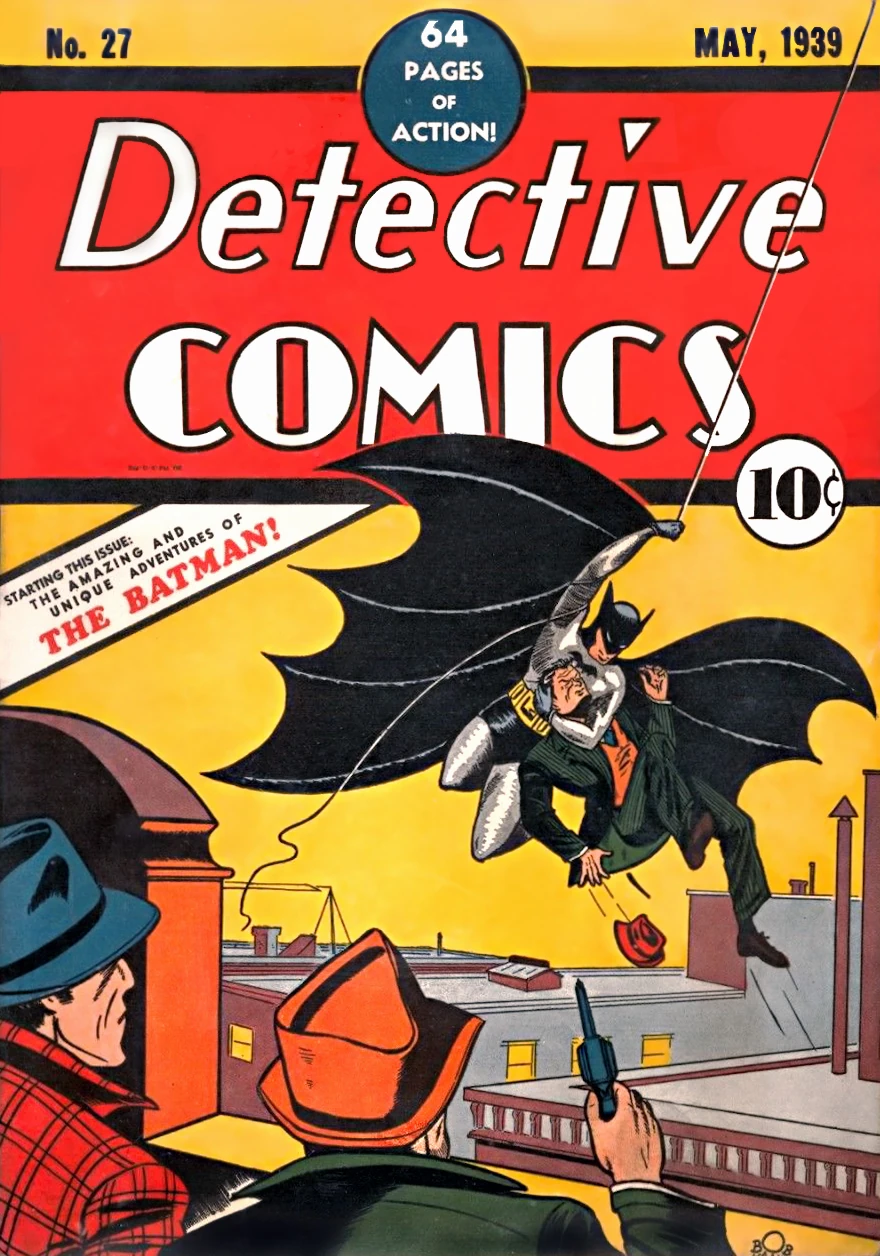
If you’ve ever read a Batman comic, watched the animated series, or saw the Dark Knight on the big screen, you know that Gotham City is defined by its shadows. It’s a city of endless fog, deceptive illusions, and masked figures hiding behind false identities. Each alleyway has its own trap, and every whispered rumor is designed to manipulate the desperate.
In a way, the modern internet isn’t all that different.
When you open your browser or scroll through your social media feeds, you enter a dense landscape where fiction and truth merge seamlessly. Misleading headlines, AI-generated deepfakes, manipulated charts, and viral outrage can deceive you. Despite the noise, one figure thrives in the dark: Batman.
The Caped Crusader doesn’t survive in Gotham on brute force alone. His greatest strength isn’t his Batmobile or utility belt full of high-tech gadgets; it’s his mind. As the World’s Greatest Detective, Batman never accepts evidence at face value. By examining clues, cross-examining sources, verifying motives, and looking for what isn’t being shown, he uncovers the truth.
Taking advantage of the digital information age requires a forensic mindset, just like Batman. Here’s how you can start reading the internet like a master detective with the help of the cowl.
1. Don’t Focus on the Signal—Investigate the Source and the Rogue
When the Joker broadcasts cryptic messages or the Riddler drops enigmatic puzzles at crime scenes, Batman doesn’t just read them over and over again. As soon as he hears the message, he shifts his focus. He analyzes the chemical composition of the ink, traces the radio frequency, and asks: Who created this, and what do they want me to do?
Usually, Batman stories have a villain who isn’t just some random person doing random stuff. There’s always a reason. The Riddler wants to prove he’s the smartest person in the room. The Joker wants chaos. Two-Face is obsessed with duality and chance. The Penguin wants power and influence.
Motivations are also present in internet content. In most cases, content doesn’t have an evil mastermind behind it. However, there are always incentives associated with content:
- Algorithms reward raw engagement.
- Creators want subscriber counts.
- Publications want clicks and ad impressions.
- Influencers want brand sponsorships.
- Political organizations want votes.
A critical mistake most internet users make is vertical reading. If they’re on an unfamiliar site, they scroll up and down to make sure it looks professional. These days, digital tricksters know how to make fake sites look legit.
Professional fact-checkers and digital detectives read laterally.
If you encounter an unfamiliar claim, leave the page immediately. Create new browser tabs and use neutral, independent authorities to locate the publisher, author, and funding source. By understanding these incentives, you don’t have to automatically reject the content. Instead, it means you understand the environment in which it was created. Never ask, “What does this article say?” until you’ve answered, “Who stands to profit if I believe it?”
2. Disarm the “Fear Toxin” (Recognize Outrage Mechanics)
Jonathan Crane, better known as the Scarecrow, is one of Batman’s most dangerous adversaries. Scarecrow’s primary weapon is a chemical fear toxin that overwhelms the victim’s prefrontal cortex, causing them to react based on instinct rather than logic.
The ultimate currency on the internet is emotional engagement-and emotional manipulation is the modern fear poison.
Clickbait creators, political operatives, and algorithmic feeds deploy ragebait to create fear, disgust, or tribal validation. Because anger keeps your thumb scrolling, algorithms prioritize posts that spark intense emotional reactions. As soon as your emotions take over, your internal detective shuts down.
To neutralize this digital fear toxin, implement Batman’s Pause Protocol:
- Detect the spike. Look for images, headlines, or videos that make you feel angry, outraged, or satisfied instantly.
- Step back. Don’t let your emotions be used as a weapon to bypass your critical reasoning.
- Verify before you amplify. Until your physiological reaction has cooled and you have cross-referenced the claim across multiple reputable sources, do not share, like, or comment.
3. Check the Date and Inspect the Visual Forensics
You might think that checking the date is ridiculously simple. However, it’s also incredibly effective.
Old case files in Gotham can’t be applied blindly to current crimes without verifying what has changed. Old information is constantly recycled online. You suddenly see an article from 2018 in your feed without its original publication date. A video from a previous election is shared as if it happened in the current election cycle. A new event is associated with an old photograph.
Although the information might have been accurate when it was published, it’s no longer relevant. If something seems shocking, check the timestamp. Then ask: What has changed since this was published?
It’s especially important when dealing with technology, scientific consensus, or company policies. For example, in a few months, a claim about AI’s capabilities might be completely out of date. Context has a shelf life.
As far as visual evidence is concerned, Batman uses thermal imaging, microscopic analysis, and 3D wireframe reconstructions. With generative AI, seeing is not believing.
4. Perform “Shadow Analysis” and Avoid Comment-Section Trapdoors
During a crime scene investigation, a master detective pays close attention to what isn’t there. The Batman notices the footprint that should be in the mud but isn’t, or the silent alarm that isn’t going off.
Most successful digital deceptions avoid outright lies. Rather than facts stripped of context, it relies on half-truths. As such, you should look into the shadows rather than accept secondary commentary when analysing data, statistics, or sensational quotes.
Don’t let the comments become your research when searching for missing context. It’s one of the hardest digital habits to break.
Your attention is drawn to an interesting post. You read the comments where someone argues the original poster is completely wrong. But then someone else posts a “fact.” Another person posts a screenshot supposedly proving the first person wrong. Now, you’re 87 comments in and feeling even more confused than before.
Although comments can be entertaining, they don’t necessarily prove anything:
- A confident stranger isn’t a reliable source.
- Viral replies aren’t fact-checks.
- 10,000 people repeating the same claim doesn’t transform it into truth.
Popularity is not verification. If something matters, leave the comment section behind and investigate the underlying claim independently.
Conclusion: Step Into the Batcave and Be Willing to Change Your Mind
If you don’t think critically, the internet becomes a Gotham City of digital misdirection-a maze designed to exploit your biases, outrage you, and trick you into spreading false narratives.
The hardest part of detective work is being willing to change your mind.
There are times when the evidence does not support your original theory. Good. Change the theory.
It’s one of the worst habits we’ve developed online to treat changing our minds as a weakness. It isn’t. When you change your mind due to better evidence, you’ve shown intellectual strength. Batman isn’t committed to a theory just because he announced it five minutes ago; he’s committed to finding the solution.
Don’t become attached to being right. Become attached to finding out what’s true.
So, put on your cowl, shine a light through the digital fog, and read the internet like a true detective next time you open your browser.