
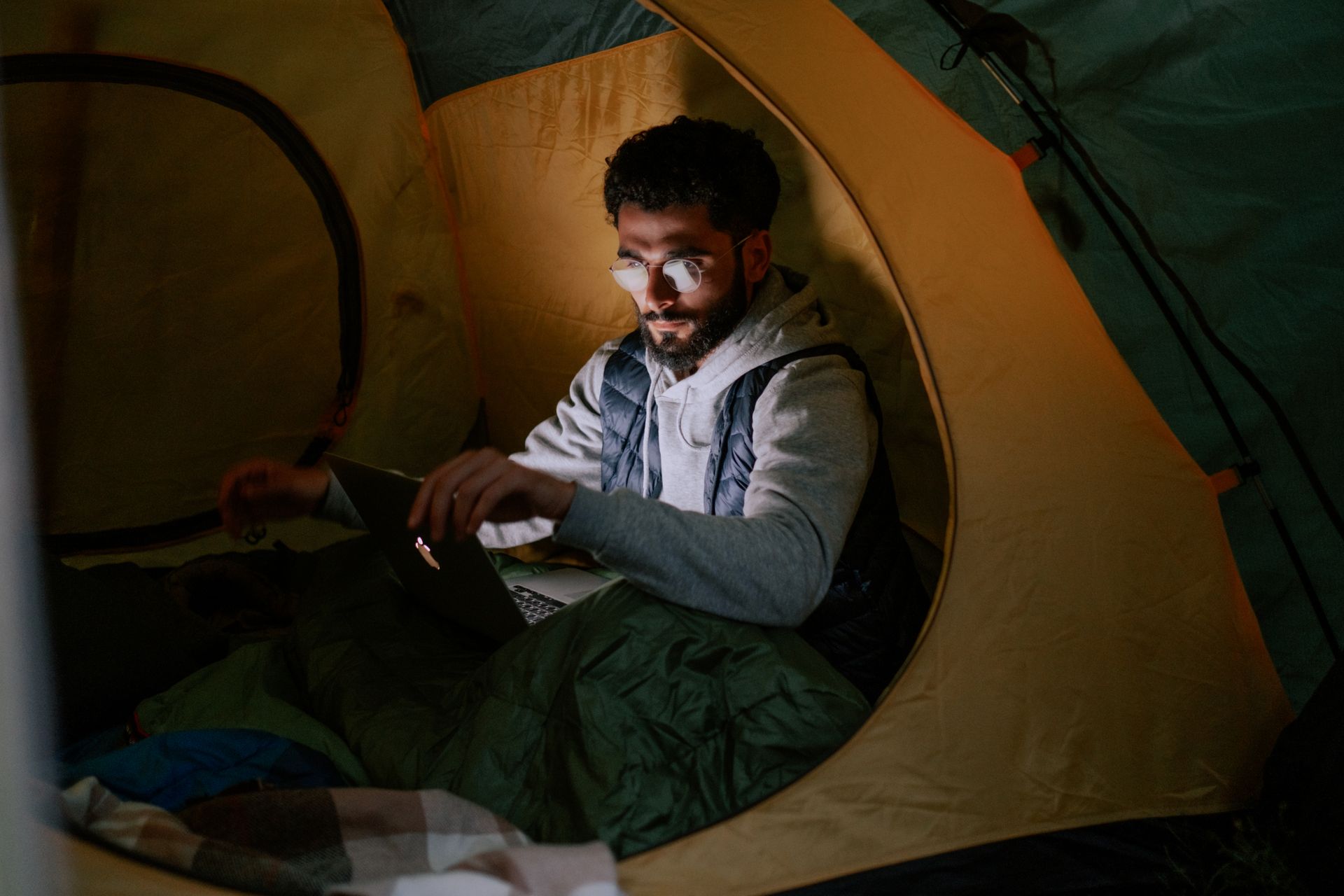
Don’t ask me how it happened. But years ago, the YouTube algorithm recommended a video of a guy camping in a patch of bushes right next to a highway ramp. Out of curiosity, I clicked on it. And I was instantly hooked.
That man was the one and only Steve Wallis, aka Camping With Steve.
In case you don’t know, Steve Wallis is the king of “stealth camping,” which involves pitching a tent or rolling out a sleeping bag in places you’re not supposed to, such as behind industrial parks, in green spaces, or on public land, all while leaving no trace and going undetected. There’s now an entire ecosystem of creators sharing their own covert outdoor adventures. Channels like Sam Bananas, Todd Champion, Kevin from Small Plots, and Sam from the Northwest Wind have all built dedicated audiences by slipping into the shadows for a night.
But why are millions of people, including me, obsessed with watching grown men hide from security guards or people walking their dogs on a trail?
It’s the thrill of the micro-adventure. It’s all about getting away from hyper-regulated, crowded campgrounds. It’s the sheer fascination of watching someone explore a familiar landscape from a new, hidden perspective. These videos showcase remarkable resourcefulness and extreme minimalism. And, paradoxically, they are some of the most relaxing, comforting pieces of media on the internet. I mean, come on. Nothing beats watching a guy cook a hot meal on a tiny stove while a rainstorm rages outside the makeshift shelter he built.
Maybe you run a business blog, a marketing channel, a tech review site, or a local history vlog. You might have no intention of sleeping in a ditch behind a Home Depot. However, stealth camping videos use storytelling mechanics that work everywhere.
Using the stealth camping community as an example, here are the content creation lessons you can learn.
1. Radical Authenticity: Own Your Quirks
The biggest mistake corporate or overly polished creators make is trying to look flawless. For example, traditional reality TV is hyper-produced, scripted, and slick. And, guess what? Audiences have become numb to it. Stealth camping videos work because they seem raw and aggressively genuine.
Look at the top creators in the space. They carry their own heavy gear. Often, they are faced with brutal and unexpected weather conditions. With a camera pressed into their faces, they have to fix mistakes on the spot. Most importantly, they don’t hide their unique personalities or weird habits. Whether it’s Steve Wallis enjoying a casual “step two” drink by the campfire or another creator talking through their anxiety about getting caught, they let their guard down.
This authenticity builds an immediate, unbreakable emotional connection with the viewer. If you see a creator shivering in a wet sleeping bag, you aren’t judging them, you’re rooting for them.
How to apply this to your niche:
- Stop editing out every little mistake in your workflow. Describe how you fixed an SEO campaign that failed or a software tool that crashed mid-tutorial.
- Drop the “corporate spokesperson” voice. You should speak to your audience exactly like you would to a friend at a diner.
- Let your natural quirks show. People subscribe to people, not to perfect, sterilized information.
2. Share the Whole Journey (The Good, the Bad, and the Ugly)
A typical stealth camping video rarely goes according to plan. In fact, the videos where everything goes right are usually the most boring. It’s the struggle that makes these videos so appealing.
It might be the perfect night under the stars, only for a torrential downpour to flood their bivy sack at 2:00 AM. Perhaps they realize they forgot fuel for their stove and need to figure out how to eat cold beans in the dark. By sharing the raw, unvarnished truth of the experience, the creator creates a compelling narrative. And, it also builds immediate stakes.
Often, content creators and digital strategists only share highlights. They post about massive traffic spikes, flawless product launches, and successes. Humans, however, do not relate to constant winning. We relate to the climb.
The Narrative Arc: The Plan ➔ The Unforeseen Obstacle ➔ The Pivot ➔ The Resolution
How to apply this to your niche:
- Don’t just document the result, document the process as well. For instance, you should write about the sleepless nights and broken codes you experienced while building a website or launching a new product.
- Don’t be afraid to talk about your losses. Rather than a dozen bragging posts, share a post-mortem about a failed marketing strategy.
- Take advantage of the tension. In any story, there needs to be a villain — even if it is just a bad software update or a broken camera lens.
3. The Power of the Creative Micro-Collab
You’ll notice something fascinating about the stealth camping community: these creators collaborate constantly. They shout each other out, participate in joint campouts, and comment on each other’s videos.
On paper, they are direct competitors competing for the same audience. In reality, they understand a fundamental truth of the modern creator economy: audience sharing beats audience hoarding every single time.
The audience is not split in half when Sam Bananas or Todd Champion appears in a video with another creator. It expands the entire pie. It introduces viewers to a fresh perspective, and both channels have a massive cross-pollination of subscribers. As a result, a solitary hobby transforms into a passionate, active community.
In fact, Tony from Random Adventures 2.0 organizes an Annual Creator and Subscriber Meetup for content creators across platforms like YouTube, Facebook, and Instagram to collaborate and connect directly with their audience.
How to apply this to your niche:
- Ditch the scarcity mindset. You shouldn’t view other creators or businesses in your field as competitors.
- Get in touch with peers for micro-collaborations. Do a quick newsletter exchange, co-author a blog post, or do a live stream with each other.
- Be an active champion for those whose work you admire. As a generous, well-connected authority in your field, you can leave thoughtful comments on other creators’ platforms and highlight their insights in your own.
Final Thoughts: The Mindset is Free
At its core, stealth camping is about looking at a completely ordinary, everyday environment, a patch of trees behind an office park, a bridge underpass, a rooftop, and finding a hidden adventure inside it. It’s about making something captivating from nothing.
As content creators and digital builders, we must cultivate the same mindset. To hold people’s attention, you don’t need a huge production budget, a studio audience, or a flawless script. All you need to do is take them along for the ride, show them how you solve real problems, and treat them as allies rather than rivals.