
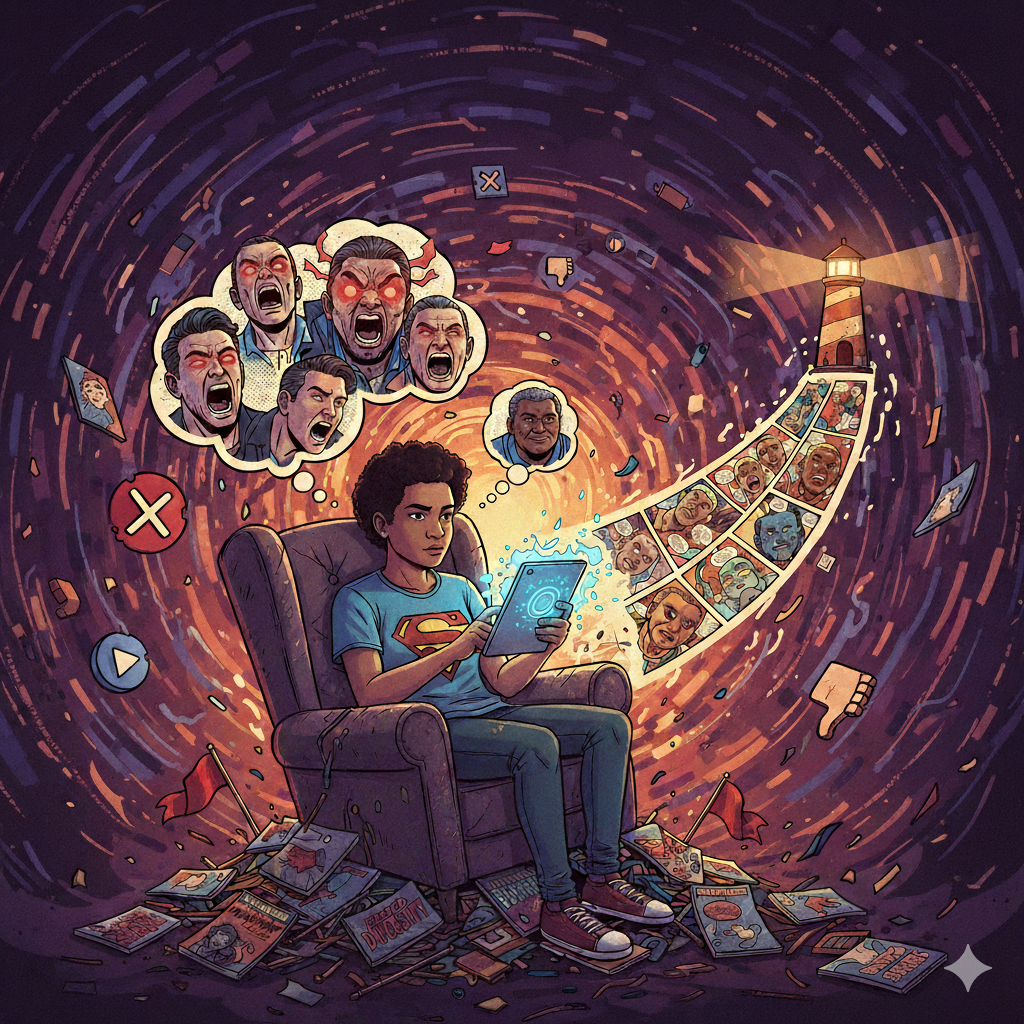
Since I was a kid, I’ve been a comic book fan. Nothing beats the feeling of tearing into a new graphic novel, getting lost in a deep-dive video about a universe I’ve followed for decades, or finally seeing your favorite heroes on screen. However, being a fan on YouTube these days feels… exhausting.
Anyone who has ever searched for a trailer breakdown or a review of a new issue knows exactly what I mean. Click one video, and suddenly you’re surrounded by “The Death of Comics” or “Why [Character] is Ruined” from Nerdrotic, Geeks and Gamers, Eric July, HellvsBabyface, and Mauler — please don’t look these chuds up, you’re not missing anything.
This isn’t just a fluke; it’s a full-blown rabbit hole of negativity, and it’s starting to grind my gears because I actually want to enjoy my hobby.
The “Anti-Fan” Problem
My problem is that a lot of the people who make these videos don’t seem like fans to me. They seem like grifters. They’ve discovered that the algorithm doesn’t care if you’re happy; it cares if you’re engaged. And nothing keeps people clicking like anger and outrage.
Despite claiming to love the “good old days,” they spend all their time tearing down the industry they supposedly cherish. It’s a weird paradox. Why wouldn’t you want the comic industry to grow if you love it? Furthermore, new voices and perspectives aren’t destroying comics. They’re the only way the industry survives. After all, stagnation kills art.
As a fan and content creator, my greatest concern is for the new fans. Imagine being a kid excited to learn more about their favorite hero, only to stumble into an echo chamber that tells you everything you like is “trash” for reasons that have nothing to do with the actual story.
The Algorithm’s Cold Logic: Why It Loves the Grifters
Let’s get one thing straight: YouTube’s algorithm isn’t a sentient villain with a sinister agenda. It’s a data-driven, math-heavy system designed to maximize watch time. It pinpoints what keeps people glued to the screen-the clicks, likes, and heated comments– and follows up with another serving. Sadly, manufactured controversy and outrage are the ultimate fuel for engagement.
Specifically, here’s why the algorithm constantly gives the mic to anti-fan channels:
- Negative resonance is powerful. Anger, frustration, and indignation are powerful emotions that drive engagement. When a creator frames content around “wokeness destroying comics,” “forced diversity,” or “the downfall of X character,” it taps into existing anxieties and creates an emotional response.
- The confirmation bias loop. Algorithms learn what you like. After watching one video critical of a new comic book direction, it is assumed that you want more. Grifters are aware of this, so they consistently create content that supports a particular worldview.
- Volume over value. It’s not uncommon for these channels to produce huge amounts of content, hitting keywords and topics consistently promoted through algorithms. In other words, they’re professional content factories, not just casual fans.
- Toxic community building. Even though these channels are toxic, they often foster a strong sense of community among their viewers. As a result, there are more comments, more shares, and longer watch times, which are all signals the algorithm loves.
- Hyperbolic clickbait. Many of their titles and thumbnails make exaggerated claims or use provocative imagery in an attempt to make the posts more clickable. Rather than measuring quality or truthfulness, the algorithm measures engagement.
How to Escape the Rabbit Hole and Reclaim Your Feed
It takes a proactive, media-literate mindset to break free. Thankfully, for a clean digital space, here is your toolkit:
Be stingy with your clicks.
Every click is essentially a vote. Whether you’re clicking out of morbid curiosity or just to see how bad it is, the algorithm registers that as a “Yes, please.” If the thumbnail looks like a rage-fest, resist.
Relentlessly curate your feed.
- The “not interested” button. Use it like Cap’s shield. Always click the three dots at the bottom of a negative video to select “Not interested” or “Don’t recommend channel.”
- Scrub your history. You should periodically review your watch history. To retrain the algorithm on what you actually value, delete videos that have accidentally fallen down a rabbit hole from your history.
- Subscribe to the “antidotes.” Look for creators who are both passionate about their medium and offer nuanced and genuine criticism.
Diversify your sources.
Don’t rely solely on an algorithm for your news. Take a look at multiple sources instead.
- Industry news sites. Follow reputable comic news sites (e.g., ComicBook.com, CBR, Newsarama).
- YouTube channels. Check out channels like Comic Tropes, Owen Likes Comics, Casually Comics, Comic Drake, or Comics Explained.
- Podcasts. Listen to podcasts from diverse voices in the industry, such as Off Panel or Screw it We’re Just Gonna Talk About Comics!
- Direct from publishers/creators. Keep up with the official publisher channels, the creators’ social media, and their personal blogs.
- Forums/communities. Become involved in well-moderated online forums and subreddits dedicated to meaningful discussion, such as League of Comic Geeks, as well as r/comicbooks on Reddit, and CGC Forums.
Engage critically, not emotionally.
If you come across critical content, ask yourself:
- What is the creator’s actual argument, beyond the emotion?
- Are they citing evidence, or just making subjective claims?
- Do they offer solutions, or just complain?
- What is their underlying motivation? Is it to build up, or tear down?
The Future of Fandom Depends on You
As with any art form, comic books thrive on innovation and reaching new audiences. To survive and grow, it needs diversification. Even though they claim to love the past, grifters actively hinder this future. Seeing how algorithms work and curating our digital spaces consciously allows us to fight negative trends, support genuine creators, and ensure that comics will remain vibrant, inclusive, and inspiring for generations to come.
Your clicks, your watch time, and your engagement matter. You should use them to build the fandom you want, not what you think the algorithms want you to see.