
There’s a place we’ve all been. You finish a draft, the cursor blinks at the end of a “brilliant” closing sentence, and you feel like you’ve just captured lightning in a bottle. Just to be sure, though, you give one more read, think, “Yeah, this is gold,” and hit publish.
But, something’s off. Your gut is telling you that maybe your latest post wasn’t gold. So, you go back and reread it again. You notice a typo in the second paragraph. Your third point basically repeats your first. It’s off-pace, and what’s with that “killer” conclusion? The whole thing is a ramble.
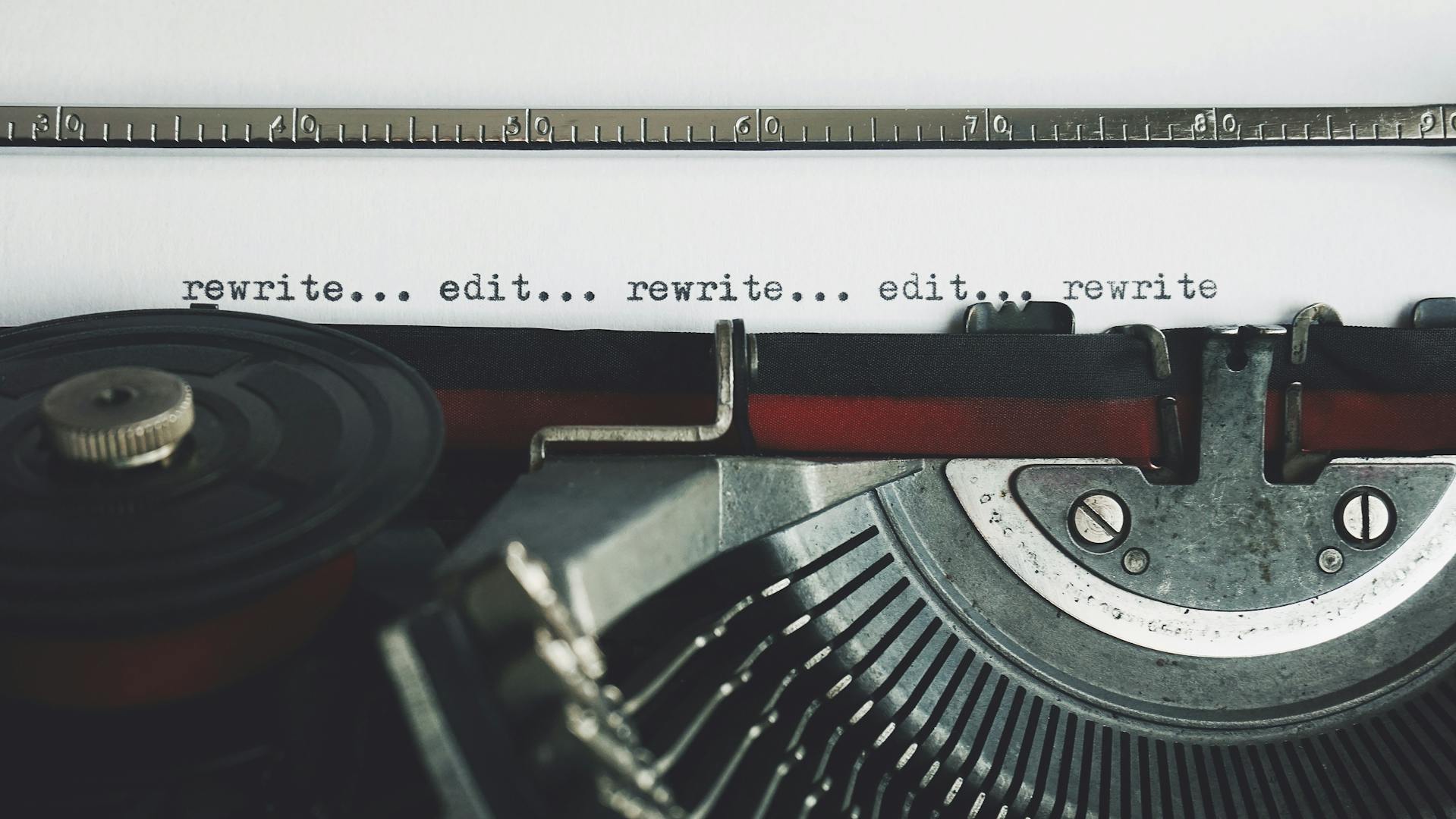
I’ll be completely honest. In my experience as a content creator, the hardest person to edit is yourself. When you read over your writing, your brain fills in the gaps and skips over errors because it knows what you meant to say. When you want to level up, you must stop being the writer and become the editor. It’s like switching from Thor, the guy with thunder and raw power, to Batman, the guy who finds the weakness in the plan.
So, this article shows how you can develop that editorial eye and recognize your own flaws before others do.
1. The “Cooling-Off” Period (Your Fortress of Solitude)
There’s no better editorial tool than a clock. After all, when you’ve just finished writing, you’re too close to the material. You’re probably even overly attached to your “darlings” as well. That’s why you need a retreat.
- The 24-hour rule. Step away for a full day if you can. After a while, the “writer’s high” will wear off, and you’ll look at it with fresh eyes.
- The micro-break. Are you under a tight deadline? A fifteen-minute walk with the dog can reset your brain enough to catch errors that are otherwise invisible.
2. Change the Scenery (The Multiverse Strategy)
When you use the same app every day, your brain gets used to how your text looks. By shifting your perspective, you can trick your mind into seeing the work as “new.” Think of it as looking at your draft from a different Earth in the multiverse.
- Swap the font. Replace Arial with a jarring font like Courier New. By changing the spacing, your eyes are forced to slow down and actually process every word.
- Print it out. There’s something about paper that reveals structural flaws that screens just hide. Take out your pen and get creative.
- Toggle modes. Write it in Dark Mode, then edit it in Light Mode. A small sensory shift breaks your brain’s autopilot.
3. Read it Out Loud (The Sonic Signature)
Whenever we read silently, we skim. When we read aloud, though, we must acknowledge every single syllable. If the rhythm is off, you’ll instantly hear it. It’s like hearing the soundtrack to your own movie.
- Listen for the trip-ups. If you find yourself running out of breath mid-sentence, your sentence is way too long. When you stumble over a phrase, the wording is clunky.
- Use text-to-speech. Listen to your computer read it. A neutral voice reading your words is an honest and brutal way to identify repetitive words. Similarly, if your readers feel bored reading your intro, the AI will feel the same way.
4. Reverse Outlining: The Structural X-Ray
Sometimes a post feels off, but you don’t know why. The problem is usually structural. Reverse outlining gives youX-ray vision like Superman, seeing the skeleton of the piece.
- The method. Write a one-sentence summary of what each paragraph actually accomplishes in your finished draft.
- The analysis. Does Paragraph 4 accomplish the same thing as Paragraph 2? Does Paragraph 6 belong under another heading? Whenever a paragraph lacks a clear “job,” cut it like Wolverine with his near-indestructible adamantium claws.
5. The “Search and Destroy” Mission
Whenever we’re trying to find a rhythm, we turn to “crutch words”. These common villains can be found using Ctrl+F:
- Weak qualifiers. Words like very, really, just, and totally are like henchmen – they take up space without contributing.
- Passive voice. Overusing is, am, are, was, and were can make your writing seem sluggish and indirect.
- Clichés. Phrases like “think outside the box” or “at the end of the day” are just filler words that people find boring.
- Exclamation points. Punctuation isn’t necessary if the writing is strong. So, save the “BAM!” and “POW!” for when they really matter.
6. Edit for the “Scanners”
People don’t just read online; they consume it. Therefore, a massive block of text will seem like an insurmountable wall to them. Your content should be readable like a comic book page with lots of visual cues.
- The “squint test.” Try squinting at your screen. You need more white space if you see huge blocks of solid gray.
- Bullet points and subheads. You can use these to draw the reader’s attention. Whenever a section exceeds 300 words without a subhead, break it up.
7. Kill Your Darlings
I find this part to be the most challenging. There are times when you write a perfect sentence, but it doesn’t actually advance the argument. Instead, it’s a side quest that doesn’t fit into the main story arc.
Ask yourself: “If I take this out, does the reader lose anything they actually need?” Delete the answer if no. It’s not your job to show off your vocabulary; it’s your job to respect the reader’s time.
The Goal: Objective Clarity
To become a great editor, you don’t need to be “perfect” – you need to be clear. By seeing your own flaws, you’re not just fixing mistakes; you’re building trust. In other words, you’re doing the hard work of thinking in a way that your audience will understand you easily.
Try something new the next time you finish a draft. Give it a challenge. Disassemble it, move the bones around, and reassemble it. That’s where you can discover your real powers.