
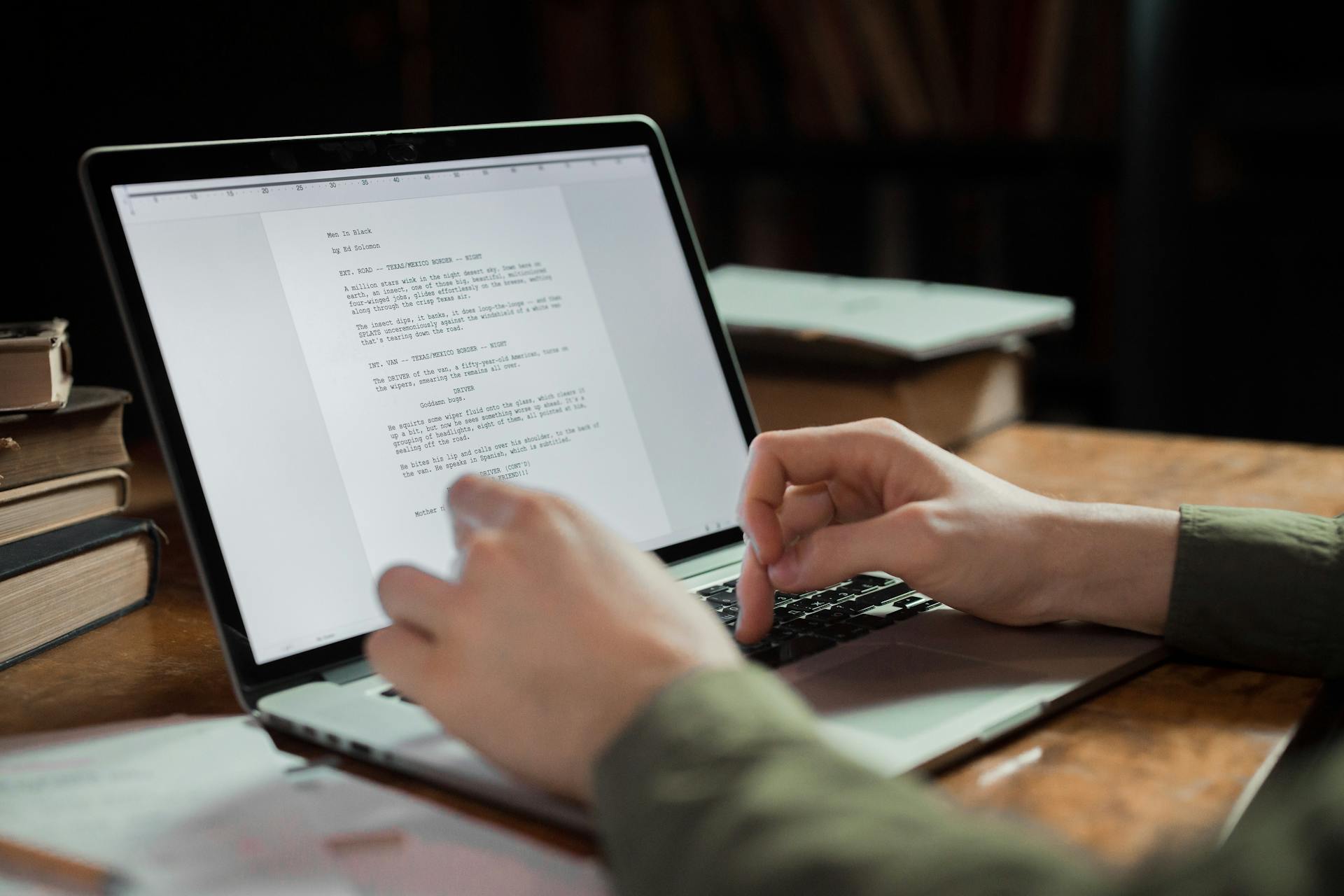
There comes a point in every content creator’s career where they hit a wall – not because they lack ideas, but because they have blind spots. After writing a blog post, script, or social caption, you read it and wonder, “How did I miss that? ”
The truth is that editing your own work is one of the hardest skills to master. Why? There are cognitive biases that make self-editing hard, like confirmation bias, where your brain fills in gaps and ignores errors because you know what you meant to say. It can also be difficult for writers who have strong emotional attachments to their work to spot mistakes, since they lack distance. I know. I’ve been there before.
But, if you’re going to play the content creation game, it’s an incredibly powerful teammate.
Here’s the thing, though. It’s not just about grammar and polish when it comes to content editing. It’s about flow, clarity, and intent. It’s looking at your work from the outside, stripping away ego, and asking, “Would this hold a stranger’s attention?” The creators who can answer that honestly, and revise accordingly, are the ones who stand out.
So let’s talk about how to catch your own flaws before anyone else.
1. Create Distance Before You Edit
Proximity is the biggest enemy of good editing. If you focus too closely on your words, you won’t see what’s actually on the page – only what you meant to write.
The simplest way to fix that is to walk away.
Allow your work to sit for at least a few hours (or ideally, overnight). Once your phrasing and emotional investment have faded, come back to it. After rereading it fresh, your brain shifts into “reader mode,” and you’ll start to notice logic, tone, and pacing gaps.
When deadlines don’t allow this kind of pause, change your environment or medium. You can print it, read it aloud, or view it on your phone instead of your laptop. By changing the context, your brain will see the text differently.
Pro tip: When you read out loud, you are much more likely to catch clunky sentences and unnatural phrasings. If you stumble, your readers will too.
2. Identify Your “Creative Tells”
There are patterns in everything we write – repeated habits, phrasing, or blind spots. You might overuse certain transitions (“that said,” “in today’s world”), start too many sentences with “but,” or bury your main point halfway down.
Keeping a running list of those tells is the key to spotting them. Think of it as an editing checklist tailored to your needs.
Among my own checklist items are:
- Reduce the number of qualifiers (“really,” “actually,” “just”)
- Get to the point by paragraph two by trimming long introductions
- Vary sentence rhythm — no more than three short bursts in a row
- Replace vague phrases (“some people say”) with something concrete
When you track your own quirks over time, you’ll be able to catch them more quickly – even in the middle of a draft. As a result of self-awareness, editing becomes a tool for pattern recognition rather than punishment.
3. Edit for One Goal at a Time
Creators often edit everything at once, including grammar, structure, tone, SEO, and formatting. It’s a recipe for chaos.
Instead, you might want to edit in layers. In other words, focus on one goal per pass:
- Pass 1: Structure. Is the story logical? Does each section flow naturally?
- Pass 2: Clarity. Can a newcomer understand your main point without rereading?
- Pass 3: Style and tone. Does it sound like you — or a watered-down template?
- Pass 4: Precision. Tighten word choice, cut filler, and smooth transitions.
It’s like tuning a guitar – one string at a time. This will allow you to make faster, more intentional edits and preserve your creative flow.
4. Learn to Read Like an Outsider
When you hit “publish,” your reader doesn’t care how long you worked on it. Their immediate concern is whether it’s worth their time.
This is why you should learn to read your work as if it were someone else’s. Pretend you found it randomly online. Would you keep reading? Would you share it?
Here’s a useful trick: read your opening paragraph as if it’s competing with a feed full of content. Are you hooked by it, or does it take a long time to get going? Something’s wrong if you wouldn’t click your own headline or scroll past your own post.
By asking a trusted friend (not another creator) to skim your piece and tell you where they lost interest, you can run an informal “reader test”. They don’t need to fix it — just point to the drop-off moment. That’s your weak spot.
5. Separate Writing from Judgment
A good editor doesn’t hate his or her work – he or she detaches himself from it. You’ll either overcorrect or freeze up if you edit with too much emotion (“This sucks”).
Editing should be approached more like diagnostics. Rather than tearing yourself down, you’re improving a system. You can ask neutral questions like:
- “Is this the clearest way to say that?”
- “Does this transition feel smooth?”
- “Is this paragraph doing any real work?”
Progress is the goal, not perfection. Whenever you edit without ego, you gain more creative freedom. As you trust your editing instincts, you’ll start taking bigger risks in your writing.
6. Steal from Editors, Not Just Writers
Many writers study other writers’ styles, but few study editors, who shape the final product.
Don’t just read what’s written in professional publications, but also how it’s written and edited. Pay attention to their word choice, pacing, and structure. Take notes on how magazines like The Atlantic or Entrepreneur trim filler, use short sections, and end strong.
Even better, reverse-engineer your favorite longform piece. You can copy it into a document and annotate it like an editor: Where’s the hook? How does it transition between ideas? How are the quotes or examples spaced out?
Learning to think like an editor will change the way you read – and your content will improve instantly.
7. Build an Editing Routine You Actually Enjoy
When you edit, you shouldn’t feel punished; you should feel like you’re sharpening a blade. Add it to your creative routine.
Some creators schedule “editing days” when they revisit older drafts instead of starting from scratch. To stay focused on edits, others set timers or ritualized checklists.
For me, separating micro and macro edits is the best way to edit. When sipping my morning coffee? I’ll polish headlines and intros. Late at night? That’s when I tear apart the structure. By editing in energy-matched blocks, I don’t feel resentful afterward.
8. Use Editing Tools as a Second Pair of Eyes
Even if you do all of the above, you’re likely to miss something. Here’s where editing tools come in.
For my own writing, I use Grammarly and Wordtune. I use Grammarly to catch grammar, punctuation, and clarity errors that I miss in my manual edits, especially after spending a long time staring at a paragraph. Wordtune, on the other hand, works like a stylistic coach, suggesting alternative phrasing and varying sentence structure.
It’s important not to rely solely on these tools. They should be used as guides, not crutches. If they find any weaknesses in your voice and purpose, use your own editorial judgment to determine whether to make the changes.
Additionally, Hemingway Editor (for readability) and ProWritingAid (for style analysis) are excellent options. The best tool is one that complements your workflow and helps you notice what you usually overlook.
Final Thought: Mastery Isn’t in the First Draft
Anyone can write. In the end, however, it is editing – real editing – that separates creators from content mills and algorithm chasers. Basically, it’s the difference between someone who posts and someone who publishes.
As a creator, you must adopt a fluency with your own flaws. Catch dulling messages before the world does. As your editorial instinct sharpens, your creative identity becomes stronger.
Ultimately, content editing isn’t a cleanup job. It’s your creative compass — and it might be your most underrated superpower.