
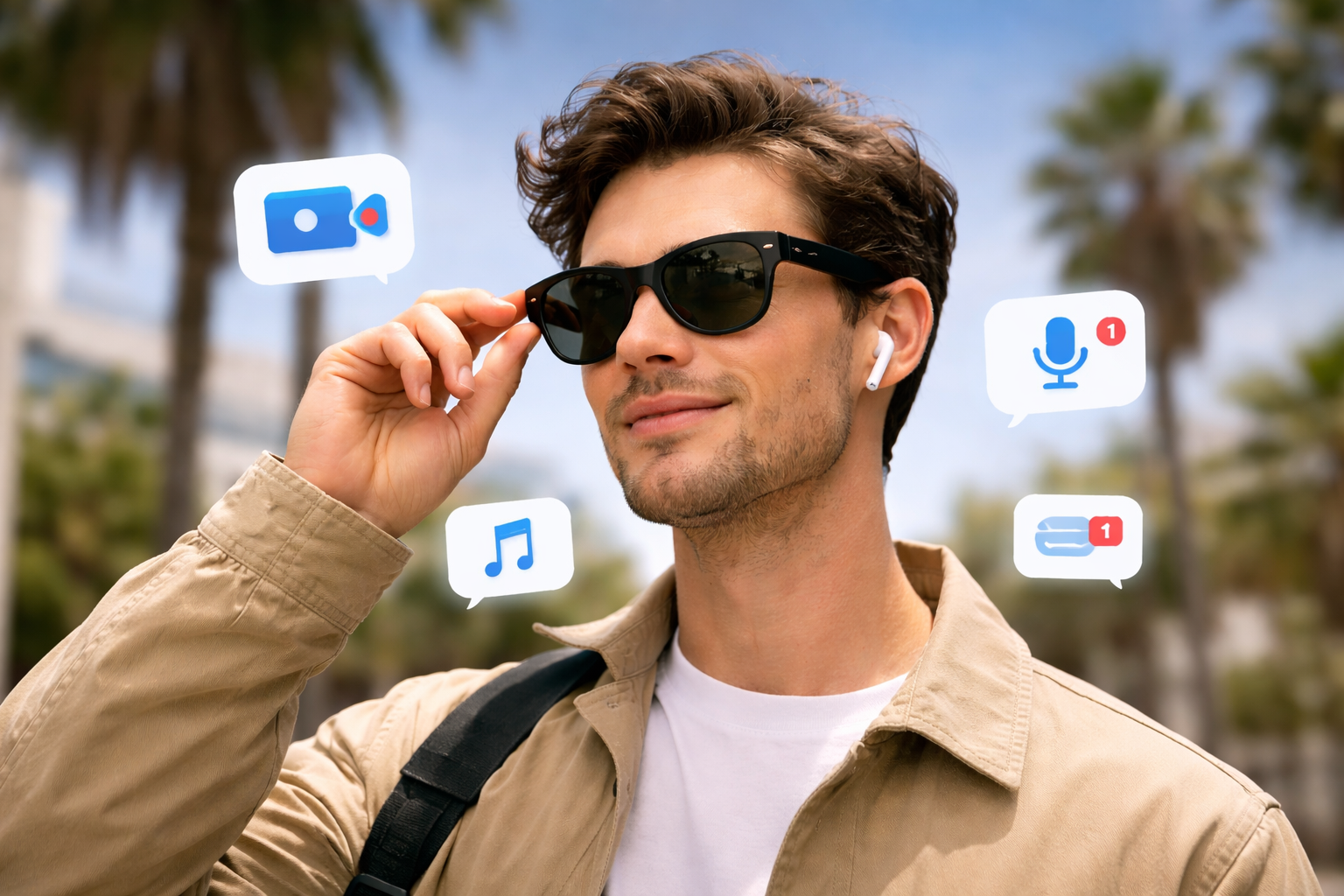
There’s no denying that the digital creator space has reached a tipping point. We’ve moved past the novelty of “look at what I can do with a camera” into “look at what I can do with my life.” Yet, recently, I stumbled across an article from Mashable with the headline: “Pranksters and pickup artists are using Meta Ray-Ban glasses to harass strangers for content.”
The article details influencers using smart glasses’ discreet recording features to film “low-effort” videos, such as harassing service workers, the homeless, and unsuspecting women. A few even pretend to have disabilities to provoke an emotional response.
My first reaction? Duh.
As Elton John once sang, “I’ve seen that movie too.” It’s no secret that the “influencer” label has long been misused to cover up unfunny stunts that border on illegal. Remember the guy arrested for spraying bug killer on Walmart produce? That wasn’t content; it was a crime.
Ironically, “prank” content isn’t even groundbreaking. It’s a centuries-old trope weaponized by algorithms. However, until we understand the history of the “gotcha,” we won’t be able to build something sustainable.
A Brief History of the “Punchline”
From ancient folklore tricks to Candid Camera’s 1948 debut, the appeal of pranks has always been watching a real person react to an unreal situation. As a form of high-stakes physical performance art, Jackass took the “prank” one step further in the 2000s.
With YouTube’s explosion in the late 2000s, entry barriers disappeared. As far as digital pranks were concerned, it was a “golden era”:
- The Low Stakes: Prank calls (Ownage Pranks) and a couple of wars (Prank Versus Prank).
- The Illusionists: Magic of Rahat, where “social experiments” were still mostly lighthearted.
- The “It’s Just a Prank, Bro” Era: Towards the middle of the 2010s, saturation forced creators to increase their output. Harmless fun turned into harassment. Because outrage equals engagement, exploiting low-wage workers or staging dangerous stunts (like DaddyOFive) became the norm.
Increasingly, “pranks” today are staged, scripted, and designed purely to trigger algorithmic spikes. As a result, they degrade the subject and give the audience only a fleeting, cheap sense of embarrassment.
Why the POV Era is Different
We now have tools that surpass the wildest imaginations of the prank pioneers. Eyewear equipped with AI-driven insights and cinema-grade displays has shed its reputation as an experimental product, even mocked (remember Glassholes?), and has emerged as a cutting-edge tech frontier.
However, shifting away from pranks is more than just a moral high ground. Prank viewers are fleeting, but POV storytelling builds communities. A new era is beginning, one of ‘connection and craft,’ as opposed to shock and awe.”
The “Wholesome Chaos” Movement
Pranks are meant to get a reaction, so why not make the reaction joyful? As with traditional pranks, reverse pranks use the same setup but change the punchline.
- The Kindness Mission: Film random acts of kindness with your glasses from the perspective of a “silent protagonist.” A good deed, such as paying for someone’s groceries or leaving anonymous notes of encouragement, can feel like playing a video game.
- The “Anti-Prank”: Create a scenario that feels like a classic “gotcha.” For example, perhaps you’re following a friend with a suspicious box that reveals the item they’ve wanted for months. Often, the relief and joy are far more viral than fear.
- Aesthetic Surrealism: Make your POV a place where you document harmless “weirdness” such as a “Googly Eye Takeover” in the office or a “Silly Photo Swap” in your parents’ house, where you replace every framed photo with a puppy in a tiny hat. Unlike Jim’s pranks on Dwight on The Office, this prank is funny, victimless, visually satisfying, and not as egregious.
Leveraging the 2026 AI Suite
Film content that feels like you’re in a sci-fi movie with the upcoming “Super Sensing” updates and real-time AI features. Today, this is the content that stops the scroll.
- The AI Ingredient Challenge: Ask Meta for a 5-star recipe using three random, obscure ingredients in a grocery store. The video follows your hands as the AI guides you through shopping and cooking in real-time. It’s the ultimate “hands-free” cooking show.
- The “Memory” Hook: Take advantage of the glasses’ ability to recall your day. Film yourself forgetting where you put your passport on a chaotic morning. Using the AI, ask: “Hey Meta, where’s my passport?” The AI highlights the moment you tucked it away. An awesome “Day in the Life” hook that shows off the tech as well as your personality.
- The Foreign Language Flaneur: Using real-time translation, explore an international district. Overlay the translated text onto the video during post-production so the audience can see what you saw. This is immersive education at its finest.
High-Production “Pro-Level” POV
You can produce “studio-quality” content while walking your dog with the 2026 stabilization and Teleprompter mode on the Ray-Ban Display.
- Teleprompter “Knowledge Drops”: You can deliver perfectly scripted, high-value content directly to the camera while walking, whether it’s tech news, philosophical deep dives, or life hacks. For the viewer, you’re simply a genius who speaks flawlessly. When you look through the lens, you’re reading your script.
- The “Unboxing” Flip: This is a classic visual trick made easier. Put the glasses in a box and film yourself opening it. One of the most popular visual hooks in tech is the “bottom-up” perspective of an object being unboxed.
- Skill-Based ASMR: Whether you’re 3D printing, playing piano, or woodworking, the glasses capture every movement of your hands. With this “Masterclass” perspective, your feed becomes an educational resource instead of a circus for people who want to learn a craft.
Why This Shift Matters
The “prank era” was defined by taking. To fill a 60-second reel, people sacrificed their time, dignity, or peace of mind. The “POV era” is about giving. By giving your audience a new perspective, a new skill, or a genuine human connection, you’re creating a lasting impression.
By moving away from trickery and toward transparency, you can build a sustainable brand. The reason someone follows a creator is that they trust their vision, not because they watch a prank once as a curiosity. Let’s use our glasses in 2026 to show the world something it has never seen before, not something we wish it had.