
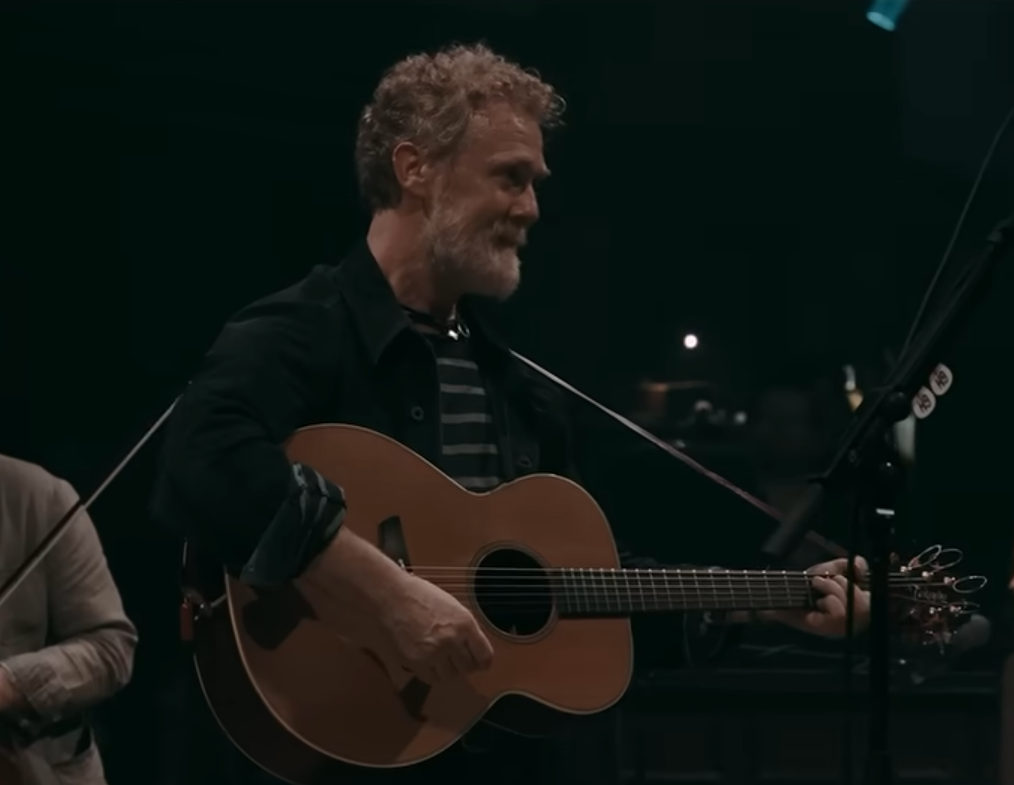
I’m not gonna front and pretend that I was the biggest Glen Hansard fan. But I’m still reeling from suden his sudden death.
You feel different when you lose an artist whose voice was quietly tucked into the background. It doesn’t feel like a headline; it hits you right in the chest. Once is still one of my favorite movies of all time. Hansard made damn good music, whether as a frontman for the Frames, a member of The Swell Season, or as a solo artist.
In the days following my dad’s passing, music was my go-to when normal words failed. Hansard’s “Didn’t He Ramble” became a great comfort during that time. And I’ll never forget catching him on tour with Eddie Vedder back in 2011. Glen and Eddie brought out Jake Clemons — whose uncle, Clarence, had recently passed away. In tribute, they played “Drive All Night” by Bruce Springsteen. Just thinking about that moment gives me goosebumps.
It’s amazing how music can lock down memories like that. As a creator, one Glen Hansard performance has always stood out to me: his cover of “Farewell Transmission.”
When it comes to understanding why that cover connects with us, and what we can learn from it as makers, we must begin at the beginning.
The Ghost in the Room
“Farewell Transmission” appears on Songs: Ohia’s seventh and final album, The Magnolia Electric Co. The song was recorded live by Steve Albini at Electrical Audio in Chicago and released by Secretly Canadian on March 4, 2003.
It’s said that Jason Molina brought a group of musicians into his studio who’d never heard the song before. No rehearsing, no tweaking, no endless takes were required. Using only the basic chords, Molina led them through this sprawling, mid-tempo burn. The sound is like a storm brewing over a dark highway.
There’s something haunting and heavy about Molina’s voice. The way he sings lines like “The real truth about it is / My heart is dark” feels so raw, like he is creating a recording of his own ghost. Sadly, Molina passed away a decade later, making the song even more poignant.
As the band jams, Molina quietly says, “Listen.” That wasn’t something he wrote. He was literally signaling to the band to stop playing after the take. But Albini just kept the tape rolling throughout the final mix. And it became one of the coolest, most iconic moments in indie rock.
Making It His Own
Glen Hansard didn’t try to sound like Molina when he covered “Farewell Transmission” on It Was Triumph We Once Proposed…Songs of Jason Molina in 2015. He didn’t try to copy that laid-back, spooky Midwestern vibe.
Instead, Glen stripped it down and played it the only way he knew how — like an Irish street busker pouring his whole heart out on a cold night on Grafton Street.
While Molina’s original feels like a quiet, slow-burning drive through the night, Glen’s version is pure catharsis. As he strums his guitar, his voice practically cracks as he pushes it to the limit. As opposed to Molina’s version, Glen’s version feels like screaming against the dark until the sun rises.
Despite their differences, both versions are incredible. And honestly, that’s where the real lightbulb turns off for anyone who creates content.
What Creators Can Learn from All This
Whether you’re writing blogs, recording a podcast, making videos, or posting on social media, the question is: how do I make people care about what I’ve already shared? To answer that, here’s what we can learn from these two versions of “Farewell Transmission.”
Don’t hide the messy stuff.
The famous “Listen” at the end of Molina’s track is only there because he didn’t edit it out. Nowadays, it’s so easy to overedit our videos, polish every sentence to perfection, and hide any mistakes. Total perfection, however, is boring. Don’t be afraid to leave in some noise, unscripted moments, or rough edges. That messy human stuff is what makes people feel connected to you.
Copy the feeling, not the steps.
If Glen had just played the same chords at the same speed as Molina, nobody would remember his cover. He knew that honoring an inspiration does not mean copying it verbatim. It’s about running an idea through your own filter. When you’re tackling a popular topic or a trend in your niche, don’t just follow the crowd. Instead, embrace your own background, tone, and voice. Make it sound like you.
Put some real heart into it.
It was pure emotion that made Glen’s music so meaningful to me when my dad died — and that Vedder show in 2011 so unforgettable. They weren’t just going through the motions on stage. They cared, and you could feel it. People don’t love and connect with sanitized, generic content. People are drawn to creators who aren’t afraid to be real, to share what they care about, and to talk about what actually gives them goosebumps.
The Final Fade Out
Jason Molina sang “listen” as a quiet warning. The same words were echoed right back into the night by Glen Hansard years later.
With both of them gone now, those songs stand as a powerful reminder of what happens when you put your heart into whatever you do. Next time you sit down at your keyboard or turn on your mic, don’t worry about being perfect. Just be vulnerable, put your real self out there, and give people a reason to listen.